1
Thinking and learning to learn
How to approach a problem you have not seen before.
Strategy rather than recall — and the habit of checking your own working.
Grades 1 to 5 at Jain Heritage School, Whitefield. Full CBSE syllabus, full CBSE rigour — delivered the way Finland does it. Your child will still learn the times tables. They will simply also understand what multiplication is.
A child who has memorised the water cycle can answer one question. A child who understands it can answer a hundred.
Between six and eleven, a child stops playing to learn and starts learning on purpose. That transition is the whole job of primary school — and it is the one our stage design is built around.
A child who wants to know does not need to be made to study. So we protect the wanting — with open-ended questions, problems that have more than one route, and teachers who answer "I don't know, let's find out" without embarrassment.
The goal by Grade 5 is a child who can be handed something unfamiliar and make a start on it alone. That is built by giving real choices early, and by letting the consequences of those choices be real too.
Children do not fail to learn nearly as often as they fail to learn the way they were taught. We identify how each child actually takes information in, and we record it, so the next teacher does not start from zero.
"Not everything from Finland applies here. We adopt the best practices that work for our students and fit within the CBSE framework."
— Jain Heritage School, Whitefield · Institutional FrameworkWe are not asking you to gamble on an unfamiliar board. The board is CBSE, the syllabus is CBSE, the certificate is CBSE. What changes is what happens in the room between nine and three.

Instead of studying water in science, then again in geography, then writing about it in English, children investigate water — where ours comes from, what it costs, what happens when it runs out — and pull in whatever subjects the question genuinely needs.
Every child takes part in at least one multidisciplinary module each year, sometimes working with several teachers at once. It sounds loose. It is the opposite:
"I like to take the learning outside the classroom and show students the world and how
it works — and it helps very much that we have a very well-structured curriculum."
— A Finnish teacher, from the school's content archive
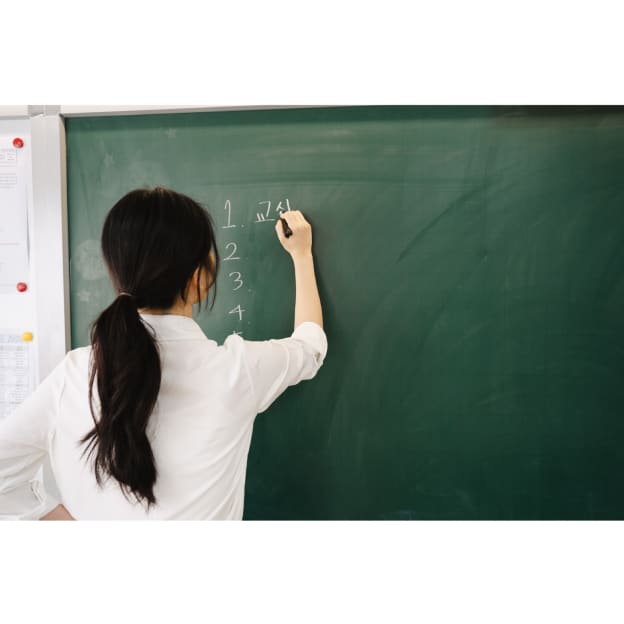
The Manipulative Learning Centre is where abstractions get made physical — fractions you can hold, volume you discover by pouring, area you build. For a seven-year-old, this is the difference between knowing a rule and owning an idea.
The Contemplative Learning Centre is the other half: a quiet room for reflection and metacognition — thinking about your own thinking. Nearly every school in Whitefield has laboratories. A room designed for reflection is rare, and it is not decoration — it is where independent learning is actually taught.
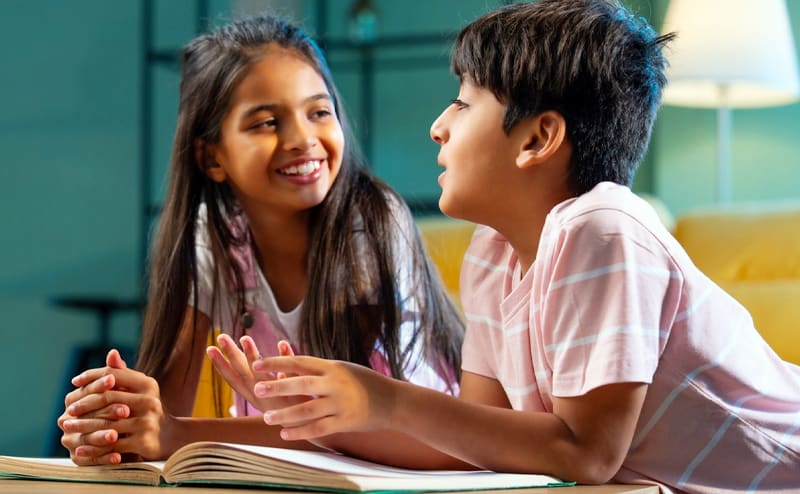
Each child keeps an individual learning portfolio that follows them through primary — work, growth, teacher observations, their own reflections. Day to day, assessment is formative: observations, discussions, reflective journals, peer and self-assessment.
Formal assessment continues too — projects, presentations and unit tests to CBSE requirements. What we do not do is publish a rank order and let a nine-year-old conclude they are a number.
A child who cannot sit still is not a discipline problem — very often they are a kinesthetic learner in a visual classroom. We find the door that opens, and we write it down.
Learns through images, diagrams and demonstration.
Learns through listening, discussion and saying it aloud.
Learns through movement and doing it with their hands.
Alongside this, all eight multiple intelligences are deliberately developed: linguistic, logical-mathematical, spatial, bodily-kinesthetic, musical, interpersonal, intrapersonal and naturalistic. A school that only rewards two of the eight is not measuring children — it is filtering them.
This is the central design idea of the Finnish National Core Curriculum, and the part most schools get wrong by bolting on a weekly "life skills" class. Competences are built inside maths, inside language, inside science — or they are not built at all.
"They are a bridge between what you learn from the book and the real world."
How to approach a problem you have not seen before.
Strategy rather than recall — and the habit of checking your own working.
Reading a room, and being understood in it.
Practised in group work, in presentation, and in honest disagreement.
Everyday competence, safety and self-management.
Time, belongings, health — and the confidence to ask for help.
Making sense of text, image, number, data and screen.
Half of those were not on any syllabus a generation ago.
Using tools deliberately, not just fluently.
Knowing when to reach for a device, and when to leave it shut.
Initiative and enterprise — where a JAIN school and Finland want the same thing.
Planning, budgeting, and seeing an idea through to something real.
Having a say, and taking responsibility for the outcome.
Class decisions, school projects, and the reasoning behind both.
Talk to Nordi, our admissions assistant. Ask about the syllabus, the homework policy, the class size, the bus route past your street — or say hei and see where it goes. No form first.
No — and the reason is more interesting than a reassurance. CBSE is itself moving from memorisation to competency-based assessment under NEP 2020. Finnish pedagogy's whole emphasis is understanding and critical thinking.
We are not deviating from the board. We are ahead of where the board is already going.
Which turns the risk question around. The question is no longer "will Finnish methods hurt board results?" It is "is your child's school ready for how CBSE is actually examining now?" — and every school still teaching to memorisation is the one carrying the risk.
Every subject taught to CBSE specification. Nothing dropped, nothing substituted.
The national structure, followed properly, from the Foundational Stage upward.
CBSE's own current framework — and the one Finnish method is built for.
Rigorous grading, and full CBSE-mandated compliance reporting.
Everything needed for competitive exams later is being built here, now — as understanding rather than as drill.
A CBSE certificate travels — across India and across a transfer. That matters in Whitefield.
"Be present. Listen to students. We need to give time to learn — there's no hurry."
— A Finnish educator, from the school's own content archive
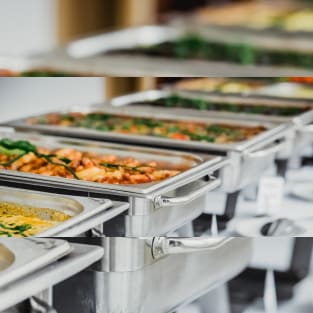
Finland's system treats regular exercise, proper nutrition and rest as structural parts of the school day — because a hungry nine-year-old cannot think, and no method survives that. So we did not improvise it. Our meals are run in partnership with Sodexo, with menus designed by qualified dieticians and cooked to an audited hygiene standard.
Meal service is part of the programme for Grades 1–10. See the full menu on your visit, or read the meal questions below.
 Est. 1990 · JAIN Group of Institutions
Finnish method is the new part. Understanding how Indian families, Indian boards and Indian children actually work is the old part — and it is the harder one to buy.
Jain Heritage School is part of the JAIN Group of Institutions, built on Jain College, founded in 1990 by Dr. Chenraj Roychand — who started out as a salesman earning ₹50 a month. In the early 1990s the group deliberately rebuilt its teaching methods around innovation and enterprise. Adopting the one national curriculum in the world that treats entrepreneurship as a core cross-curricular competence is not a change of direction for this group. It is the same direction, thirty years on.
"Cradle to career" is the group's own phrase. A child joining Grade 1 here is entering a pathway, not just a school.
Knowledge makes character. The founding principle, and still the point.
No. We prepare students for CBSE using methods that develop deeper understanding — which is better preparation than rote memorisation, not weaker. The syllabus, the structure and the assessment requirements are all followed in full.
Three ways, and they are checkable. We are grounded in research — the Finnish National Core Curriculum, not a philosophy someone invented. We are aligned with policy — CBSE and NEP 2020. And we are measured by outcomes — student learning data, portfolios and competency records. "Progressive" is a mood. This is a method with a document trail.
Our approach helps a struggling child more, not less, because the first thing we do is identify how they learn and then provide targeted support — rather than repeating the same delivery louder. Finland has among the lowest achievement gaps in the world, and that is a consequence of exactly this design.
Not in the pile-of-worksheets sense. The school runs a deliberate homework policy built on the view that a nine-year-old's evening belongs to their family, and that consolidation is better done well in class than badly at 9pm. Reading, projects and genuine practice do continue at home — what stops is volume for its own sake.
Usually yes, and the adjustment is more often social than academic. Because the syllabus is CBSE, there is no content gap to close. What takes a few weeks is the shift from being told what to do to being asked what they think. We map the learning style early and pair new joiners deliberately.
Personalised attention is structurally impossible at high ratios, so this is exactly the right thing to press us on. We will give you the current figure for the specific grade your child would join, on your visit — a real number for a real class beats an average.
We share the full structure — tuition, meals, supplies, transport by distance, and the discounts and concessions available — on your campus visit, so you see the complete picture rather than a headline number. Please disregard fee figures on third-party school-aggregator websites; several are badly out of date.
Grades 6–11 continue in the same school, with the pedagogy stepping up into project-based and self-directed work, and an optional academic enrichment programme available from Grade 6 for families who want more depth. Ask us about Grades 6–11 →
Any school can print "inquiry-based" on a brochure. Very few will let you stand at the back of an ordinary Grade 3 lesson and watch. We will. It is the only proof that settles this.
Survey No. 190, Kannamangala Village, Bidarahalli Hobli,
Whitefield, Bengaluru 560067