DRAG
DRAG
 DRAG
DRAG


At Jain Heritage School, we blend academic excellence with innovative teaching methodologies, empowering students to become lifelong learners and future-ready global citizens.

Jain Heritage School Whitefield Bangalore

Before a single lesson begins, every child is seen, heard and settled. Circle Time is how a Finnish-inspired classroom starts its day — not as an activity squeezed into the timetable, but as the foundation the rest of the day stands on.
The day opens with greetings and affirmations. A child who is welcomed by name settles faster and participates sooner.
Children take turns to speak — a story, a worry, a small victory. Everyone else practises the harder skill: listening.
A song, a game or role-play — chosen deliberately to build teamwork, turn-taking and problem-solving through play.
The circle closes with a moment of quiet: what did we notice, and what are we thankful for? Calm carries into the first lesson.

Students open the day by putting words to what they feel and what they have experienced. In Finnish classrooms this is not a soft extra — it is how trust is built, and trust is what makes a child brave enough to attempt hard things later in the day.
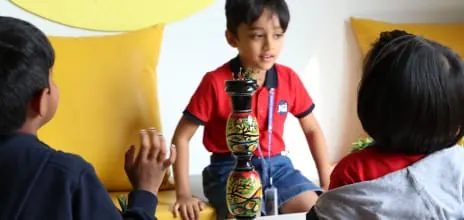
Games in the circle look like fun — and they are — but each one is doing quiet work: reading the group, waiting for a turn, losing gracefully, communicating clearly. Team skills are taught here years before anyone calls them that.
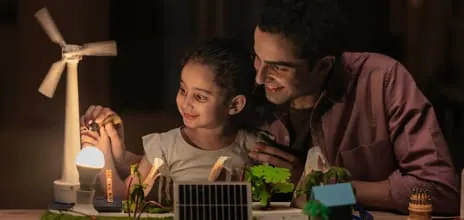
Reflective prompts help children name their emotions instead of being ruled by them. A child who can say “I was frustrated because…” has a tool for life — and a classroom that hears it becomes a kinder place to learn.
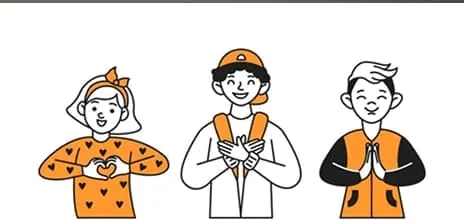
A few minutes of noticing what went right — a friend’s help, a good breakfast, sunshine at break — steadily builds the optimistic, compassionate mindset that research keeps linking to resilient learners.
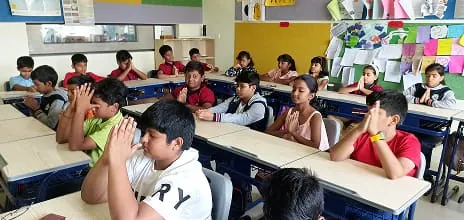
Gentle breathing exercises give students a way to reset themselves — before a test, after a dispute, or simply at nine in the morning. Clarity and calm are teachable, and we teach them daily.
Circle Time isn’t just an activity — it is the foundation of emotional safety, expression and connection in every student’s day.
The callback form could not load. Call admissions directly, or reload to try again.